Tuesday, 25 June 2013

Sunshine, moths and scrub removal...

What fantastic weather we have been having the last few days, just in time for our scrub removal at Fallin Bing yesterday. Silver birch is encroaching across the Bing (and Wester Moss) and is shading out wildflowers such as Oxeye daisy, Common birds foot trefoil and Common knapweed that are incredibly important for many species especially pollinating insects. The birch saplings were cleared from an area to the north west of the bing and the removed material was carried into woodland to create habitat piles for small mammals, amphibians and maybe even reptiles.  
Clearing some birch that is overhanging the footpath around the bing.
I would like to say thank you to TCV, SUNS (Stirling University Nature Society) and to Stirling Ranger Scott Mason for coming along to help. A big thank you also goes to Kate Fuller who joined us at lunch time to tell the group about the Inner Forth Landscape Initiative (http://innerforthlandscape.wordpress.com/).

It was really nice to see the flowers out across Fallin and with the warm weather all the bees, butterflies and hoverflies were out. Common blue, Meadow brown and a male Orange tip butterfly were all seen during the day along with the caterpillar, chrysalis and adults of the 6 spot burnet moths. It was nice to show the group these amazing insects whilst we worked.
The underside of a female Common blue butterfly seen during the day
While the group were clearing scrub I was getting footage of the work we were doing and also of some of the invertebrate life living at the bing. I was really lucky to get some excellent footage of the 6 spot burnet moth caterpillar and even some bees feeding.
A 6 spot burnet moth on Vipers bugloss in front of the group clearing scrub from the bing (C) Suzanne Bairner
The date of the fourth visit to Fallin Bing will be in 2 or 3 months time and has yet to be decided. We will be making bee banks on some of the slopes that are free of vegetation and maybe planting more wildflower seed. If you are interested in coming along to this event or for information about the project please contact Suzanne Bairner at suzanne.bairner@buglife.org.uk and 01786 447504.
Keep reading the blog for more updates on the project and for more information on the history of the Fallin.

Monday, 17 June 2013

Scrub clearance 24th June

Hello,

We have been really lucky with the weather the last few weeks and I’m looking forward to seeing what stage the wildflowers we planted last month are at- fingers crossed!

A Red campion that was planted during visit 2 of the project

I am hoping that this lovely weather will remain for our habitat creation day at Fallin Bing next week on Monday 24th June! The habitat creation day runs from 10am-3pm and everyone is welcome to attend for as little or as long as they want. It will be a great chance to meet new people and learn about the history of coal mining at Fallin and also to learn about the Inner Forth Landscape Initiave from Kate Fuller who will be coming along to speak to the group.

We will be removing encroaching scrub, mostly Birch, from around the bing and making small habitat piles for mammals, amphibians and reptiles within the woodland. Volunteers from TCV will be coming along to lend a hand and will also be bringing equipment for us to use. I hope that no one is camera shy as I will be bringing along the cameras to film the work we will be doing! For more information about the day contact Suzanne Bairner at suzanne.bairner@buglife.org.uk and 01786 447504.

Monday, 3 June 2013

Summer has arrived at Fallin!

Paul Gunn (TCV Natural Communities trainee) and Anthony Morrow (TCV Natural Communities Co-ordinator) went along to the event at Fallin Mining museum organised by Polmaise Community Council on Saturday the 1st of June. We would like to say thank you to Ros Griffith for organising the event. The event was a great success as not only was the sun shining but we spoke to different members of the community council and have begun to collect stories about the Bing from the people who know it so well.
Plaque at the entrance of the mining museum at Fallin
 

The mining museum looking grand in the sun

Paul is busy organising a timeline of the history of coal mining at Fallin that will be put up in the library shortly. Visitors to the library can put up suggestions of positive changes they would like to see on the Bing and also share their stories.  We aim to get this up before the third visit to Fallin through the All Our Stories project on Monday the 24th of June.


A new sign at the entrance of Fallin Bing highlighting the importance of the site for wildlife

The third visit to fallin on Monday the 24th of June will involve removing birch scrub that is encroaching onto the Bing and we aim to collect more stories from people who have been helping us with the habitat creation work on the Bing and from people from the local area. If interested in coming along to the event please contact Suzanne Bairner on suzanne.bairner@buglife.org.ukand 01786 447504.

Thursday, 23 May 2013

Fallin Mining Museum- WIldlfower planting 1st June.

Polmaise Community Council is running a wildflower planting day at the Mining museum, of Stirling Road in Fallin on the 1st of June from 10am-2pm. The wildflowers will be planted in the garden of the mining museum and will provide food for pollinating insects including bees, butterfly's and hoverfly's. They also aim to raise awareness of picking up litter and cleaning up after your dog. Everyone is welcome to attend the event and help make the mining museum and the surrounding area of Fallin a cleaner place for everyone to enjoy.

This Foxglove was planted last week at Fallin Bing and will help the pollinating insects at the bing. 
For more information about the wildflower planting day on the 1st of June or the All Our Stories project contact Suzanne Bairner at Suzanne.bairner@buglife.org.uk and 01786 447504


Friday, 17 May 2013

Wildflower planting succes!

I would like to say a BIG thank you to all the volunteers from TCV, Stirling ranger volunteer group and the eco group from Fallin primary school who helped us plant 850 wildflower plug plants and 1kg of wildflower seed around Fallin Bing yesterday. The wildflower plug plants included Foxglove (Digitalis purpurea), Yarrow (Achillea millefolium) and Common dog violet (Viola riviniana) that went into the meadow and Honeysuckle (Lonicera periclymenum) which was planted into woodland. The wildflower seed mix included a diverse range of perennials including Bush vetch (Vicia sepium) and Field scabious (Knautia arvensis) and biennials including Cow parsley (Anthriscus sylvestris) and Vipers bugloss (Echium vulgare). By planting a diverse range of native species of different flower shape and colour that will flower at different times during the year, this will not only improve wildflower species diversity within the meadow but will help provide a wide range of food plants for pollinating insects.

TCV and volunteers through Stirling Ranger service planting wildflowers into the meadow.

The volunteers had a great time planting wildflowers especially with the sun shining.
I have to admit that I only planted 3 plug plants yesterday but that was because I had to nip away for half an hour and when I came back half of the plants were already planted! As the volunteers did such a fantastic job and because we were really lucky with the weather I took the volunteers for a walk around the bing and then up to the top to show them the amazing view.

View of Wester Moss from the top of Fallin.

The eco-group from Fallin primary came along in the afternoon and planted some Red campion (Silene dioica) into the meadow and kept bringing me lots of worms and caterpillars that they were finding. At least we have chosen a good meadow to plant our wildflowers in. I look forward to seeing the plants (hopefully in flower!) in a couple of months.

Our third visit to Fallin Bing through this project will be on Monday the 24th of June and we will be removing birch scrub from around the bing and creating habitat piles for wildlife. Everyone is welcome to attend and for more information can contact myself for more information at 01786 447504 or at suzanne.bairner@buglife.org.uk.

I hope we will be lucky with the weather again!

Thursday, 9 May 2013

Wildflower planting at the bing!


Come along and help us plant wildflower plug plants around the derelict coal bing at Fallin on Thursday 16th May.

We will be planting a diversity of wildflowers of at least 16 different species including Bugle (Ajuga reptans), Foxglove (Digitalis purpurea), Field scabious (Knautia arvensis) and Vipers bugloss (Echium vulgare). By planting a range of wildflowers of different colours that will flower throughout the year this will provide a range of food plants for pollinating insects.
Bumblebee on Devils bit scabious (Succisa pratensis) (c) Suzanne Bairner
The Conservation Volunteers and the Eco-group from Fallin Primary School will be helping during the day so why not come along and help? We will be meeting at the entrance to Fallin Bing at the mining museum car park at 10am on Thursday 16th May and the day will finish at about 3pm. Everyone is welcome even if you just want to come along for an hour or two or even for a chat!

Small tortoishell (Aglais urticae) butterfly feeding on Creeping buttercup (Ranunculus repens) (c) Suzanne Bairner
For more information about the day contact Suzanne Bairner at suzanne.bairner@buglife.org.uk or 01786 447504

Now let’s hope the sun will be shining!

Friday, 3 May 2013

Fallin village coal mining history

Like many other coal mining villages across Scotland, Fallin didn’t really exist as a village until coal was first discovered at the site around 1904. Nearby, coal was first unearthed in the local area a mile and a half away in Millhall in Stirling, the shafts that started operation here in about 1902 were known as Polmaise 1 and 2. The two working coal shafts at Fallin were known as Polmaise 3 and 4. The coal pits at Fallin and Millhall worked independently of each other until they converged in 1931.

The entrance to Polmaise Colliery (c) image from BBC Highlands and Islands website
As the coal pits at Fallin were too far away from other villages and more established areas, housing was built for the miners of Fallin. In four years, from when the coal pit was discovered in 1904, Fallin went from having a few cottages to a thriving community with a school and a church. The first cottages at Fallin were mostly inhabited by workmen who built the houses known as the ‘blocks’ that made up the village of Fallin. Over 180 families could be housed in 1 single block and several blocks were built during 1906-1908.

Each block was supplied with running water for domestic use and for flushing the toilets that were shared between two houses. The ‘blocks’ of Fallin were not well built and suffered from damp and infestations of woodlice and beetles. They were finally demolished in the 1950’s.

According to Dr. John C. McVail (Stirlingshire’s Medical Officer of Health), in 1910 the population of Fallin was 989 (544 males, 445 females). This was smaller than the two neighbouring coal villages (Cowie- 2559 and East Plean- 1569).

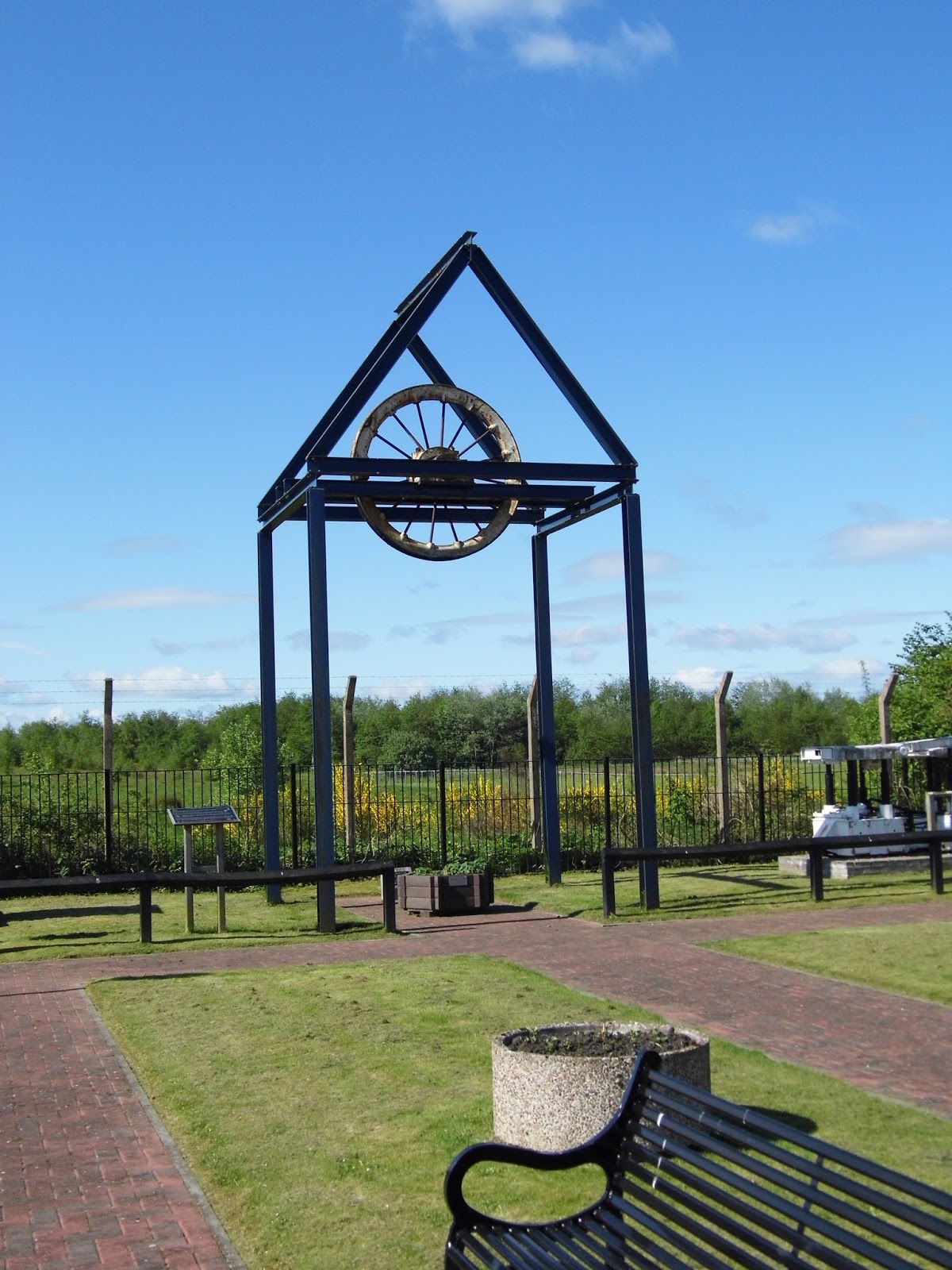
All that is left of Polmaise Colliery can now be seen at the Mining museum.
The coal pit of Fallin was in operation until 1987 when it closed down. The bing we have today has resulted from the spoil that accumulated during the coal mining. The site is approximately 27 hectares in size. The bing was re-profiled in 1994 when about a third of the material was removed from the top. During this re-profiling a variety of trees species were planted to create a diverse woodland and wildflowers were planted to create a meadow.

Today the site is owned by Stirling Council and is widely used by members of the local community including dog walkers, cyclists and joggers. Stirling Council has undertaken a variety of habitat management tasks at Fallin Bing. Adjacent to the bing is Wester Moss which is an important peat bog for the UKBAP priority species Large heath butterfly (Coenonympha tullia) and the rare Sun bog jumper spider (Heliophanus dampfi) as well as other wildlife. Wester moss is currently being managed by Butterfly Conservation.
 
Fallin Bing today overlooking Wester Moss (c) Scott Shanks


References

Hutton, G. (2009) Old Fallin, Cowie and Plean. Stenlake Publishing.

Mair, C. (2010) The Gothenburg 1910-2010 A hundred years of history in Fallin. Fallin Public House Society Ltd.
Scottish mining museum website- www.scottishminingmuseum.com/